After the Hail: How to Spot a Storm-Chaser Scam Knocking on Your Calgary Door
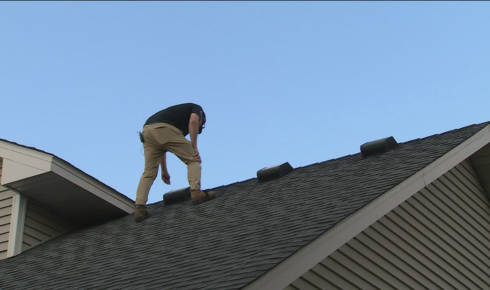
When the storm passes, the door-knockers arrive, and some of them are running a playbook designed to separate you from your insurance money.
Within days of a major Calgary hailstorm, crews fan out across the hardest-hit neighbourhoods knocking on doors. Some are legitimate local contractors responding to genuine demand. Others are storm-chasers, out-of-province operations that follow hail across the prairies, sign up as many homeowners as possible, do fast work or no work, and vanish before the warranty is ever tested.
Telling the two apart at your front door is harder than it sounds, because the good and bad ones use the same opening line. This guide breaks down the storm-chaser playbook, the high-pressure tactics to watch for, the “free roof” offers that should make you suspicious, and the practical steps to vet anyone who shows up after a storm.
Why Calgary is a storm-chaser magnet
Calgary sits inside one of Canada’s most active hail corridors, and the city has absorbed some of the costliest hailstorms in national history. The June 2020 event alone caused roughly $1.2 billion in insured damage, and the 2024 storm pushed past $2.8 billion. Where there is that much insurance money flowing at once, opportunists follow.
Storm-chasers are not a Calgary-specific problem; they work a circuit across hail-prone regions of North America. After a big Alberta storm, licence plates from other provinces and states appear in affected neighbourhoods within 48 hours. Some do competent work. The business model of the worst of them depends on volume, speed, and being gone before problems surface.
The high-pressure playbook
The pressure tactics are consistent and recognizable once you know them. The pitch usually starts with alarm: a stranger says they noticed serious damage from the street and you need to act fast before it gets worse. They offer a free inspection on the spot and climb up before you have agreed to anything.
Then comes urgency. The deal is only good today. The crew is only in your area this week. Prices are about to rise. They have one cancellation slot left. Every one of these is designed to short-circuit the comparison shopping a real decision deserves. A legitimate contractor knows you will get other quotes and does not panic when you say you want to think about it.
The most aggressive versions ask you to sign a document on the doorstep, framed as “just authorizing the inspection” or “just starting your claim.” Read anything before you sign it. That paper is sometimes a binding contract or an assignment that hands the contractor control of your insurance claim.
The “free roof” and deductible-eating offers
The phrase “free roof” is the loudest warning of all. A roof is never free. What these offers usually mean is that the contractor will absorb or “waive” your insurance deductible so it costs you nothing out of pocket. In Alberta, that is not a generous promotion. It is insurance fraud, and it can implicate you alongside the contractor.
The math behind it is simple and dishonest. A contractor who waives your $2,500 deductible has to recover that money somewhere, which means inflating the claim to your insurer, cutting materials and labour, or both. The insurer eventually catches the pattern, premiums rise across the board, and the homeowner is left with a substandard roof and exposure to a fraud they did not fully understand.
A reputable contractor will never offer to eat your deductible. They will explain that the deductible is your share of the claim and is paid by you, full stop. An offer to make it disappear is a reason to close the door, not open it.
Red flags at the door
A few signals reliably separate the storm-chaser from the legitimate local crew. None is proof on its own, but two or three together should end the conversation.
Watch for these:
- Out-of-province or out-of-country vehicle plates and no permanent local address.
- Pressure to sign anything today, especially before you have other quotes.
- An offer to waive, cover, or “work around” your insurance deductible.
- A demand for a large cash deposit up front.
- No verifiable business history, online reviews, or local references.
- Reluctance to provide proof of liability insurance and WCB coverage.
The cash-deposit-and-disappear scam is the cruelest version. A homeowner pays thousands up front, the crew does little or nothing, and the phone number stops working. By the time the insurance adjuster has finished, the storm-chaser is two provinces away chasing the next hailstorm.
The assignment-of-benefits trap
One of the most damaging documents a door-knocker can put in front of you is an assignment of benefits, sometimes buried inside what looks like a simple authorization form. Signing it hands the contractor the legal right to deal directly with your insurer, collect the claim payment, and make decisions about your roof that you would normally control. Homeowners sign it without realizing they have given away the steering wheel.
Once a contractor controls the claim, they have little incentive to keep your interests first. They negotiate the scope with the adjuster, decide what gets done, and collect the cheque, while you are left out of conversations about your own house. Disputes over an assignment of benefits can drag on for months, and untangling one after the fact is far harder than simply never signing it.
You do not need to assign anyone your benefits to get your roof fixed. You can hire a contractor, pay them directly, and keep control of your own claim. If someone at your door insists you sign over your insurance rights before they will help, that insistence is the whole reason to say no.
How to vet anyone who knocks
You do not have to decide anything at the door. Take the person’s name and company, thank them, and tell them you will be in touch after you have done your homework. A legitimate contractor respects that. A storm-chaser pushes harder, which tells you what you need to know.
Skipping that homework and hiring under pressure is one of the most common roofing mistakes Calgary homeowners make, and the checks that prevent it take only a few minutes. Confirm the company has a permanent Calgary or Alberta address you can find. Look for a real review history that predates this storm. Verify liability insurance and WCB coverage by calling the broker on the certificate, not just accepting a photo. Check whether the business is BBB accredited or a member of a recognized industry body such as the Alberta Allied Roofing Association.
Get at least three written, itemized quotes before authorizing work. Real damage does not vanish in a week, and a roof that genuinely needs replacing will still need replacing after you have compared your options. The pressure to skip this step is the scam.
A quick online search costs you nothing and reveals a lot. Look up the company name alongside words like “complaint” or “reviews” and see what comes back. A legitimate Calgary contractor leaves a trail: a website, a Google profile with reviews stretching back years, a registered business address. A storm-chaser operation often has none of that, or a brand-new presence that appeared the same week the hail did. The absence of a track record is itself the answer.
Work with your insurer, not around it
After a storm, call your own insurance company first and start the claim through them. Your insurer will send an adjuster, and you are free to get your own contractor’s inspection as well. What you should not do is let a door-knocker take over the claim through an assignment of benefits, which can hand a stranger control of how your claim is settled and paid.
Document everything yourself: photos of the damage, the date, and any debris. Keep your deductible amount in mind and budget for it as your genuine share. When the contractor’s estimate and the adjuster’s assessment are both honest, the numbers line up, and the homeowner who slowed down ends up with a properly built roof and a clean claim.
Slow down, and the scam falls apart
Almost every storm-chaser tactic depends on speed. The free roof, the today-only price, the doorstep signature, the cash deposit: each one needs you to act before you think. The single most protective thing a Calgary homeowner can do after a hailstorm is refuse to be rushed.
Take the quotes, verify the insurance, check the local history, and pay your own deductible. When you are ready, a vetted Calgary local roofing crew with a real address and a real track record will still be here, and so will their warranty. The contractor who is still in town next spring is the one worth hiring this summer.
About the author — this article was contributed by Angel’s Roofing, a locally based Calgary residential roofing contractor with a permanent address, verifiable insurance, and a long-standing presence in the community. The company is BBB accredited and never asks a homeowner to waive an insurance deductible.